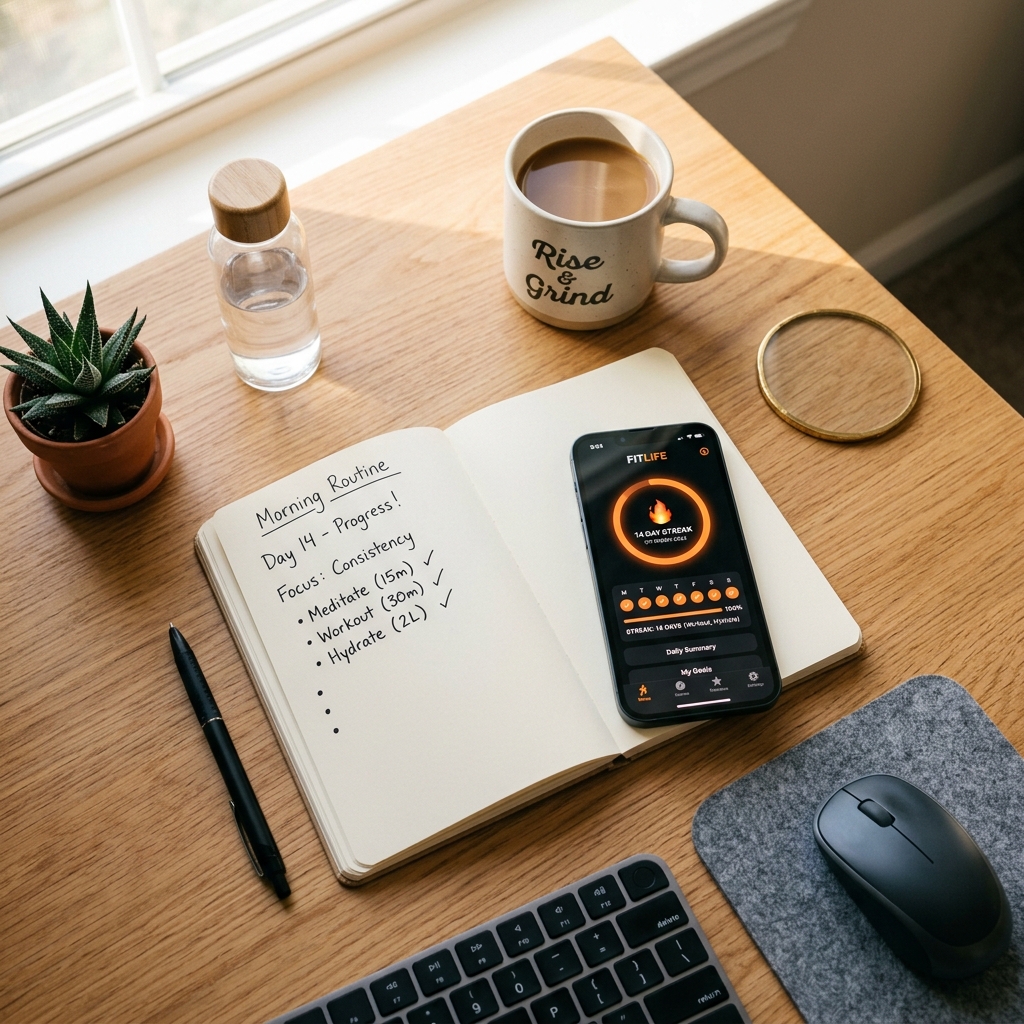
Key Takeaways
- Reppy was inspired more by Duolingo than traditional fitness apps.
- People rarely quit fitness because they don't know what exercises to do.
- The hardest part of fitness is continuing after life interrupts your routine.
- Reppy is designed to help people stop restarting, not simply start exercising.
- Long-term memory and adaptive coaching become valuable because they help users stay consistent.
I Started Looking in the Wrong Place
When I first had the idea for Reppy, I did what most founders would probably do. I downloaded nearly every fitness app I could find. I wanted to understand what already existed before building something new.
Some apps had beautiful interfaces. Others offered hundreds of workout plans or AI-generated programs. Nearly every product promised personalization, adaptive coaching, or intelligent recommendations.
The more I explored them, the more they all started to sound the same.
Everyone seemed focused on answering one question.
"What workout should you do today?"
It felt like the obvious problem to solve, but I couldn't shake the feeling that something was missing.
Then I Opened Duolingo
The biggest breakthrough didn't come from another fitness app.
It came from Duolingo.
At first, that sounds strange. One teaches languages. The other is about fitness.
But when I stopped looking at what Duolingo teaches and started looking at how it keeps people engaged, everything clicked.
Millions of people use Duolingo every day, not because learning Spanish is easy, but because the product is incredibly good at helping people come back.
Miss a day, and it encourages you to continue.
Lose a streak, and it gives you another chance.
Only have five minutes? It adjusts.
The app understands that people are busy. It doesn't expect perfection. It expects real life.
That idea stayed with me.
Fitness Has the Same Problem
The more I thought about it, the more I realized that fitness isn't actually very different.
Most people already know what healthy habits look like.
They know they should exercise.
They know they should move more.
They know strength training is good for them.
Information isn't the problem anymore.
Consistency is.
Every January, millions of people begin exercising.
Most of them don't quit because they suddenly forget why fitness matters.
They quit because life gets in the way.
Work becomes stressful.
Kids get sick.
Travel happens.
Energy disappears.
A few missed workouts slowly become a few missed months.
Most Fitness Apps Assume You're Perfect
Something about modern fitness apps has always bothered me.
They work beautifully when your life is perfectly organized.
The moment your routine breaks, the experience starts falling apart.
Imagine you miss four workouts.
You come back a week later.
The app still wants you to complete Monday's workout from last week.
Your streak is gone.
Your calendar is full of missed sessions.
Everything reminds you that you're behind.
Eventually, opening the app feels uncomfortable.
So you stop opening it altogether.
I don't think software should make people feel guilty for having a busy life.
That Changed How I Thought About Reppy
At first, I described Reppy as an AI workout coach.
It sounded exciting.
It also sounded exactly like everyone else.
Every startup today says they're personalized.
Everyone says they're powered by AI.
Everyone says they adapt.
Those aren't differentiators anymore.
They're expectations.
Eventually I stopped asking what features Reppy should have and started asking a much simpler question.
What problem are we actually solving?
The answer completely changed the direction of the product.
We're not helping people start exercising.
We're helping people continue.
The Product Isn't the Workout
Workout generation is becoming easier every year.
Artificial intelligence can already create endless workout plans.
That isn't where long-term value comes from.
The value comes from memory.
Imagine opening Reppy after using it for eight months.
It remembers when you're most likely to skip workouts.
It knows which exercises you quietly avoid.
It understands the times you're actually willing to train.
It has watched your strength improve.
It knows how your recovery affects performance.
When life gets busy, it doesn't simply wait for you to catch up.
It adapts.
Maybe today's workout becomes shorter.
Maybe the training volume decreases.
Maybe it recommends recovery instead of intensity.
The goal isn't to preserve the workout plan.
The goal is to preserve your consistency.
People Don't Buy Features
As founders, it's easy to become excited about technology.
We talk about AI memory.
Adaptive coaching.
Workout generation.
Progress analytics.
Those are mechanisms.
Users don't wake up wanting adaptive algorithms.
They wake up hoping this time will be different.
They want to stop restarting.
They want to stop feeling guilty every Monday.
They want to become someone who works out consistently without having to negotiate with themselves every evening.
That's the outcome they're buying.
Building Around Identity
One of the biggest lessons I've learned while building Reppy is that people aren't chasing workouts.
They're chasing identity.
Nobody dreams about checking off another exercise in an app.
They dream about becoming someone who naturally stays active.
Someone who doesn't constantly restart.
Someone who no longer says, "I used to work out."
That kind of change doesn't happen because a workout plan is better.
It happens because the system supports you even when life becomes messy.
Why I'm Building Reppy
I'm building Reppy because I've restarted more times than I'd like to admit.
I've promised myself that Monday would be different.
I've downloaded new fitness apps hoping this one would finally keep me motivated.
I've watched perfectly good routines disappear after one stressful week.
Over time I realized the problem wasn't motivation.
It wasn't discipline either.
The problem was that every system I tried assumed I would never fall behind.
Real people fall behind.
Real people miss workouts.
Real people lose momentum.
The products we build should expect that.
If Reppy succeeds, I don't want people to describe it as an AI workout coach.
I hope they describe it as the app that finally helped them stop restarting.
Because I don't believe the future of fitness is helping people start.
I believe it's helping them continue.
Consistency system
A product designed to help people maintain healthy habits over long periods by adapting to setbacks instead of expecting perfect routines.
Adaptive coaching
A coaching approach that changes workouts based on recovery, schedule, performance, and previous behavior rather than following a fixed plan.
Behavioral design
The practice of designing products around human psychology so they encourage lasting habits instead of short bursts of motivation.
Identity-based habits
A concept where habits become sustainable because they reinforce the type of person someone believes they are, rather than simply helping them achieve a short-term goal.
References
- Clear, J. Atomic Habits.
- Eyal, N. Hooked: How to Build Habit-Forming Products.
- Deci, E. L., & Ryan, R. M. Self-Determination Theory.