TL;DR
Consistency is not about willpower. By managing environmental friction—making workouts easy to start and skipping them harder—you can automate consistency and remove the constant need for motivation.
Key Takeaways
- Willpower is a finite resource; environmental design is permanent.
- Reducing micro-decisions before your workout ensures you follow through.
- Designing path-of-least-resistance environments is the key to autopilot habits.
The Myth of Willpower
Most people believe they fail to stay consistent with fitness due to a lack of willpower. They assume that fit people simply want it more or possess superior self-discipline.
Behavioral science research suggests otherwise. Fit people do not rely on willpower. Instead, they structure their environments to reduce decisions and eliminate friction. When starting a workout requires five separate decisions, the likelihood of skipping it increases exponentially. Willpower is a highly volatile, exhaustible resource. On days when work stress is high or sleep is poor, relying on willpower alone to get you to the gym is a losing strategy. Environmental design, on the other hand, operates on autopilot.
Managing Environmental Cues
To build an automatic workout habit, you must align your environment with your goals. Apply these three friction-reduction techniques:
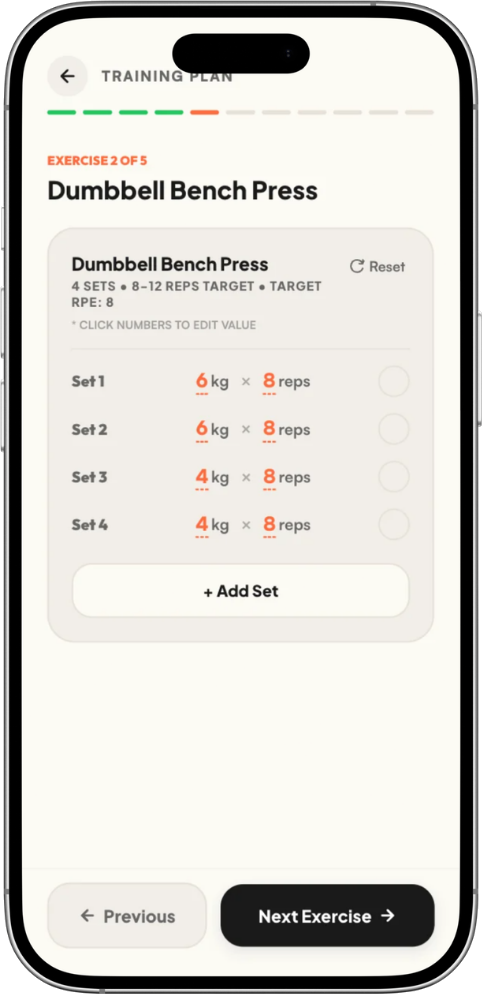
- Pre-Decision: Decide what you will do before you start. Having an exact program pre-loaded in your app removes the decision fatigue of choosing exercises on the fly.
- Context Anchoring: Tie your workout to a highly reliable daily anchor, such as "immediately after closing my laptop at 5:00 PM."
- Friction Minimization: Pack your gym bag the night before and place it by the door. Reduce the transition steps to zero. When your gym kit is already in your car or laid out on your desk, you remove the micro-decision hurdles that trigger procrastination.
Definitions
- Friction Management: The design of spaces, schedules, and cues to guide behaviors with minimal resistance.
- Willpower Depletion: The theory that self-control is a limited cognitive resource that degrades throughout the day.
- Context Anchoring: Associating a desired habit with an existing, highly consistent daily trigger or event.
References
- Wood, W., & Neal, D. T. (2007). A new look at habits and the habit-goal interface. Psychological Review, 114(4), 843-863.
- Baumeister, R. F., et al. (1998). Ego depletion: Is the active self a limited resource? Journal of Personality and Social Psychology, 74(5), 1252-1265.
Related Articles
- Why the "Never Miss Two Days" Rule Fails in Practice
- The Psychology of Restarting Without Gym Guilt