Key Takeaways
- You don't need a gym to start exercising.
- Ten minutes is enough to build momentum and healthy habits.
- Focus on good technique instead of speed.
- Rest whenever needed—progress comes from consistency.
- As your fitness improves, you can gradually increase intensity or duration.
Why Start With Just 10 Minutes?
One of the biggest mistakes beginners make is trying to do too much.
An hour-long workout sounds productive, but it can also feel intimidating. Sore muscles, busy schedules, and unrealistic expectations often cause people to quit within the first few weeks.
Starting with just ten minutes changes the equation.
Instead of asking yourself to completely change your lifestyle overnight, you're simply asking for ten minutes of movement.
That's a promise that's much easier to keep.
And the more often you keep that promise, the more likely exercise becomes part of your daily routine.
Your 10 Minute Beginner Workout
Complete each exercise for 45 seconds, followed by 15 seconds of rest before moving to the next.
Repeat the circuit once.
| Exercise | Time |
|---|---|
| March in Place | 1 minute |
| Bodyweight Squats | 1 minute |
| Wall Push-Ups | 1 minute |
| Standing Knee Raises | 1 minute |
| Glute Bridges | 1 minute |
| Bird Dogs | 1 minute |
| Reverse Lunges (Alternate Legs) | 1 minute |
| Plank Hold (or Knee Plank) | 1 minute |
| Jumping Jacks or Step Jacks | 1 minute |
| Gentle Stretch & Deep Breathing | 1 minute |
Total Time: 10 Minutes
Exercise Tips
March in Place
Start slowly to raise your heart rate.
Swing your arms naturally and stand tall.
Bodyweight Squats
Keep your feet shoulder-width apart.
Sit your hips back as though you're sitting into a chair.
Only squat as low as feels comfortable.
Wall Push-Ups
Place your hands against a wall at shoulder height.
Lower yourself with control before pushing back.
This is a great alternative to floor push-ups.
Standing Knee Raises
Lift one knee at a time toward your chest.
Engage your core throughout the movement.
Glute Bridges
Lie on your back with knees bent.
Push through your heels to lift your hips.
Pause briefly before lowering.
Bird Dogs
Start on your hands and knees.
Extend your opposite arm and leg.
Move slowly to improve balance and stability.
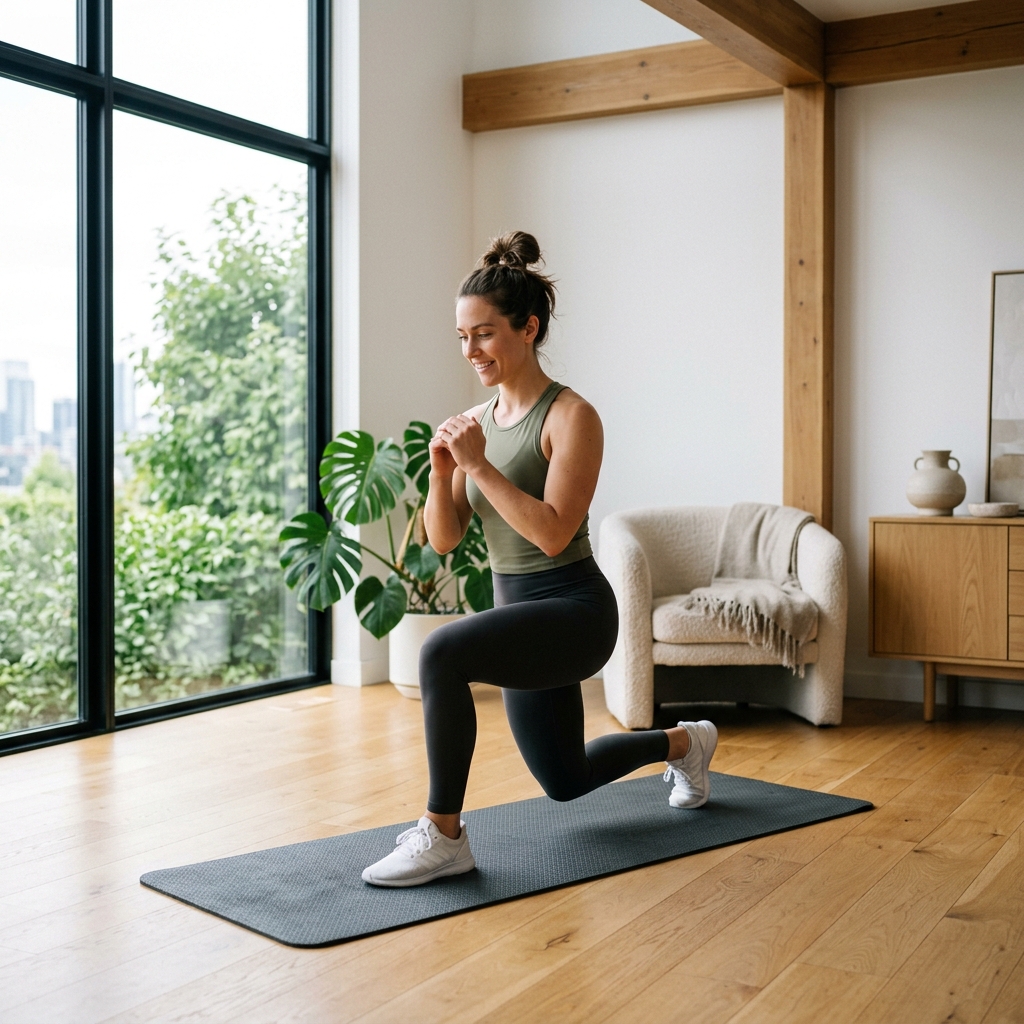
Reverse Lunges
Step backward instead of forward.
This variation is often easier on the knees for beginners.
Plank
If a full plank feels difficult, place your knees on the floor.
Focus on maintaining a straight line from shoulders to hips.
Jumping Jacks
If jumping isn't comfortable, simply step one foot out at a time while raising your arms.
Common Beginner Mistakes
Trying to Do Too Much
You don't need to feel exhausted after every workout.
The goal is to finish feeling successful—not defeated.
Skipping Warm-Ups
Even one minute of light movement helps prepare your body.
Comparing Yourself to Others
Everyone starts somewhere.
Your progress should only be measured against where you were yesterday.
Being Inconsistent
Three ten-minute workouts every week are more valuable than one intense workout every month.
How to Stay Consistent
The hardest workout isn't your first squat.
It's your tenth workout.
Consistency is built through repetition, not perfection.
Choose a time of day that fits your schedule.
Lay out your workout clothes beforehand.
Celebrate simply showing up—even if you don't feel your best.
Small wins become lasting habits.
Join the Reppy Waitlist
Get early adopter access. Zero pressure, pure consistency.
How Reppy Helps Beginners Stay Consistent
Most fitness apps give beginners a workout plan.
Reppy goes a step further.
It helps you keep going.
If you miss a workout, Reppy doesn't expect you to pick up exactly where you left off. It adapts your plan based on your schedule, recovery, and progress.
Over time, it learns:
- When you're most likely to exercise
- Which workouts you enjoy
- Which exercises you tend to avoid
- How often you train
- How your fitness improves over time
Instead of making you feel like you've failed after missing a few days, Reppy helps you get back into rhythm.
Because lasting fitness isn't about perfect weeks.
It's about continuing after imperfect ones.
Frequently Asked Questions
Should I do this workout every day?
Beginners can perform this workout three to five times per week. On rest days, consider taking a walk or doing gentle stretching.
What if I can't finish?
That's completely normal.
Take breaks whenever needed and modify exercises to match your current fitness level.
Progress comes from consistency—not perfection.
When should I increase the difficulty?
Once the workout feels comfortable, increase each exercise to 60 seconds, perform two rounds, or add slightly more challenging variations.
**Bodyweight Exercise
** An exercise that uses your own body weight as resistance.
**Circuit Training
** Completing multiple exercises in sequence with little rest.
**Progressive Overload
** Gradually increasing the difficulty of exercise to continue improving strength and fitness.
**Consistency
** Repeating healthy behaviors over time, regardless of motivation.
References
- World Health Organization. Guidelines on Physical Activity and Sedentary Behaviour.
- American College of Sports Medicine. ACSM's Guidelines for Exercise Testing and Prescription.
- American Heart Association. Recommendations for Physical Activity in Adults.